

OAE experiment in Atlantic Ocean detected CO2 uptake and no harm to marine life
Scientists say a field trial successfully demonstrated that small-scale chemical additions can be engineered, tracked and monitored in open ocean waters — without measurable harm to marine life.
The experiment, conducted in August 2025 in federal waters off the northeast coast of the U.S., involved a six-hour release of highly purified sodium hydroxide into surface waters of the Gulf of Maine. The work was carried out by the Woods Hole Oceanographic Institution under a project known as LOC-NESS — short for Locking Ocean Carbon in the Northeast Shelf and Slope—and represents the first time U.S. Environmental Protection Agency (USEPA) approved an ocean alkalinity enhancement (OAE) dispersal in offshore waters.
Ocean alkalinity enhancement is viewed by many as a potentially durable method of removing carbon dioxide from the atmosphere. By increasing seawater alkalinity, researchers aim to boost the ocean’s natural capacity to absorb CO2 from the atmosphere while counteracting acidification of ocean water. Yet the approach has drawn scrutiny from environmental groups and fishing communities concerned about unintended ecological effects.
Field methods
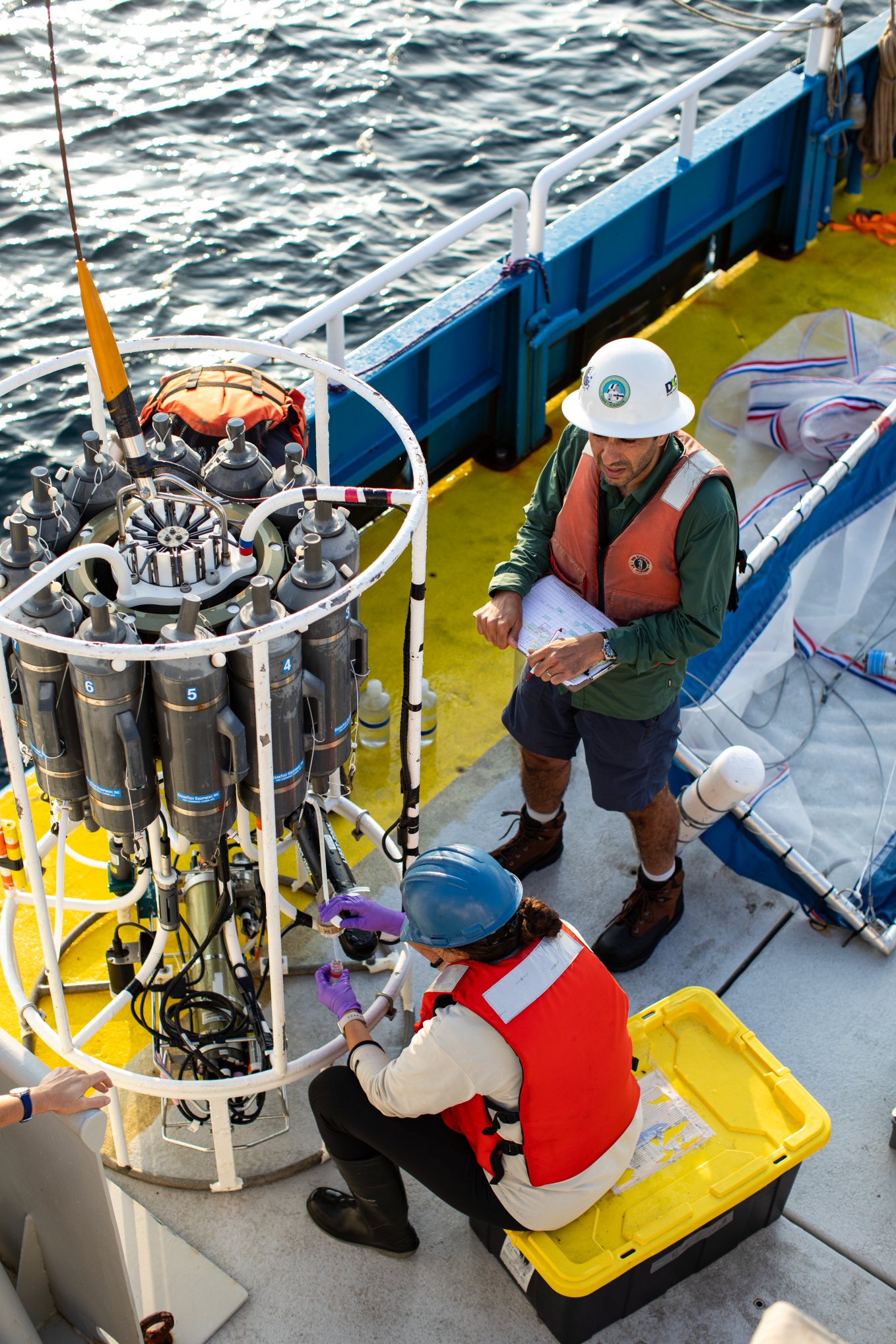
To track the dispersal, researchers added a red tracer dye — Rhodamine Water Tracer — alongside the alkaline solution. A research vessel staffed with nine scientists followed the release ship and monitored the plume for four days.
The effort deployed a variety of equipment for monitoring the plume, including: autonomous gliders, drifters, a long-range underwater vehicle, satellite imagery, and shipboard sensors. This created a real-time, monitoring system capable of tracking the treated water mass for five days.
Results and limitations
Preliminary findings suggest the alkalinity plume behaved largely as predicted. Modeled dispersal patterns closely matched field observations, and seawater pH and tracer concentrations returned to baseline within expected timeframes. Scientists reported that the experiment successfully created conditions that allowed surface waters to take up atmospheric CO2, with a portion of that uptake quantifiable through combined pH, pCO2 and tracer measurements.
Equally important, researchers say, were the biological findings. Measurements of bacteria, phytoplankton, chlorophyll levels, zooplankton, fish larvae and lobster larvae showed no statistically significant differences inside versus outside the treated area during the monitoring period. Laboratory studies conducted prior to the trial suggested impacts would depend on concentration and exposure time. At the levels used in the field experiment, scientists detected no measurable ecological disruption.
Researchers cautioned that higher levels of the ocean food chain and fisheries impacts were not directly assessed and would require additional modeling and longer-term study. But they said the base of the marine food web—the microbial and planktonic communities that underpin Gulf of Maine fisheries—appeared unaffected under the trial conditions.
Regulatory approval and community engagement
The EPA approved the project in April 2025 following a yearlong review that included two public comment periods totaling 75 days and more than 250 submitted comments. EPA received clearance from NOAA (National Oceanic and Atmospheric Administration) and the U.S. Fish and Wildlife Service prior to the experiment.
Beyond the science, LOC-NESS organizers emphasized community engagement. Team members conducted more than 50 outreach events with fishing communities, tribal representatives and other stakeholders prior to deployment. Researchers say early and repeated engagement shaped permitting conditions and research design, helping build transparency around a controversial emerging technology.
Project funding and significance
The project is funded by the Carbon to Sea Initiative and ICONIQ Ocean Co-Lab, with additional monitoring support from NOAA. It is positioned as independent research with no commercial stake in marine carbon removal ventures, even as private companies pursue related technologies.
The experiment also served as a test case for monitoring, reporting and verification (MRV) that is essential before any large-scale deployment of marine carbon removal. Project scientists said integrated use of in situ sensors, autonomous vehicles, remote sensing and numerical modeling provides a blueprint for future oversight of larger experiments.
Scientists involved in the project stressed that marine carbon dioxide removal is not a substitute for cutting greenhouse-gas emissions. Rather, they argue, carefully designed field trials are necessary to determine whether ocean-based methods can play a complementary role in climate mitigation.
For now, the Gulf of Maine experiment marks a cautious but significant step: the first federally permitted U.S. test suggesting that small-scale ocean alkalinity enhancement can be conducted with a high level of technical control — and without immediate detectable harm — while offering measurable, if modest, carbon uptake potential.