

China’s 15th Five-Year Plan builds carbon market foundations, but leaves geologic methods of CDR waiting in the wings
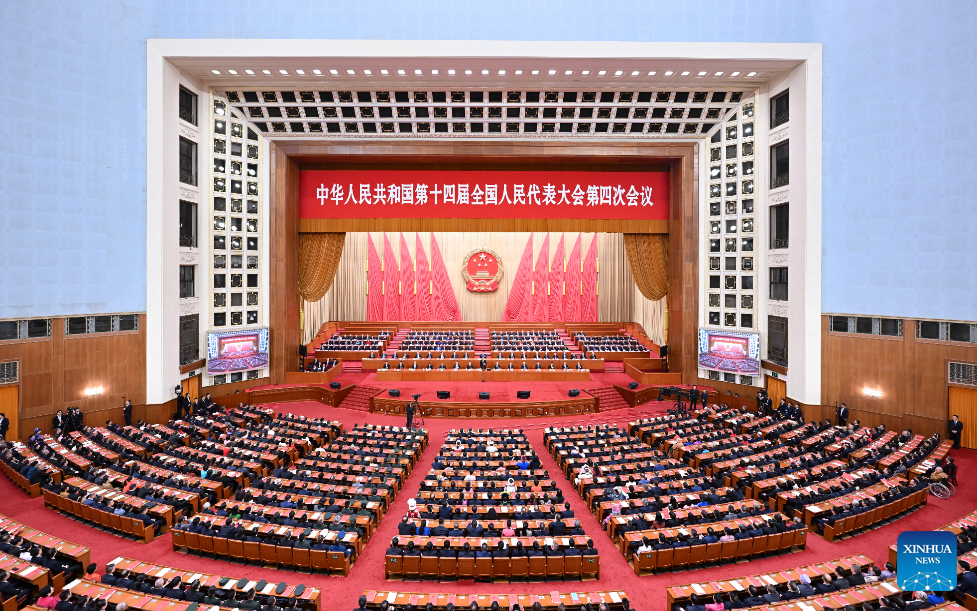
China’s latest five-year plan lays out an expansive vision for decarbonization, but stops short of explicitly embracing geologic methods of carbon removal — highlighting instead the infrastructure, accounting systems and energy transition that could underpin a future removals market.
The 15th Five-Year Plan (2026–2030) places carbon peaking and neutrality at the center of economic strategy, pairing industrial decarbonization with a more formalized carbon-management regime. The document — approved in March 2026 — calls for tighter control of emissions, expansion of carbon markets and the creation of standardized systems for measuring and labeling carbon footprints across products and industries.
For carbon-removal developers, the message is indirect but consequential. China is building the base for a future carbon market — even if it is not yet prioritizing removals.
Carbon accounting moves to center stage
One of the clearest signals in the plan is the push to standardize how emissions are measured and tracked.
China says it will:
- Establish product-level carbon footprint standards and labeling systems
- Improve national greenhouse gas inventories and monitoring
- Extend carbon management from national targets down to industries, enterprises and individual projects
That matters. A lot.
This kind of accounting architecture is essential for carbon-removal markets, which depend on credible measurement, reporting and verification (MRV). Without it, removal credits—particularly from pathways like enhanced rock weathering or ocean-based approaches—struggle to gain traction.
Carbon markets expand, voluntary systems accelerate
The plan also calls for:
- Expansion of China’s national emissions trading system (ETS)
- Faster development of a voluntary greenhouse-gas reduction market
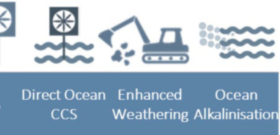
While the document does not specify whether geologic removals (DACPS/CM, ERW, OAE) will qualify, the inclusion of a voluntary market stands out. In other regions, voluntary markets have been the early buyers of removal credits.
China’s approach suggests a phased strategy: build compliance systems first, then broaden market mechanisms. Not a mandate for removals—at least not yet.
Clean energy build-out could enable DAC
The strongest near-term tailwind for geologic removals comes not from carbon policy, but from energy policy.
The plan calls for:
- A “ten-year doubling” of non-fossil energy
- Expansion of wind, solar, hydro and nuclear
- Growth in energy storage and smart grids
- Development of green hydrogen, ammonia and synthetic fuels
For direct air capture (DAC), which is highly energy-intensive, access to abundant low-carbon power is one of the largest cost drivers. Lower that barrier, and the economics start to shift.
Carbon sinks favored—nature over machines
Where the plan does explicitly address carbon removal, it focuses on ecosystem-based sinks.
China says it will:
- Increase carbon sequestration from ecosystems
- Improve carbon-sink monitoring and accounting systems
That emphasis is familiar. Nature-based solutions first. Engineered approaches later—if at all.
What it means for DAC, ERW and OAE
Direct Air Capture (DAC)
DAC stands to benefit most indirectly. Clean energy expansion, grid modernization and industrial decarbonization create the conditions needed for scale—but the plan offers no explicit demand signal.
Enhanced Rock Weathering (ERW)
ERW could gain from improved carbon accounting, product-footprint rules and voluntary markets. Still, it remains outside the policy spotlight for now.
Ocean Alkalinity Enhancement (OAE)
OAE receives no direct signal. Given the plan’s emphasis on environmental oversight, ocean-based methods may face a higher bar before gaining approval.
A foundation, not a launch
China’s new plan does not read like a mandate for engineered carbon removal. It reads like groundwork.
The country is strengthening:
- Carbon accounting frameworks
- Market mechanisms
- Clean energy supply
- Environmental monitoring systems
Those are the building blocks. The scaffolding is going up.
Whether geologic methods of carbon removal become part of the structure — that comes later.